


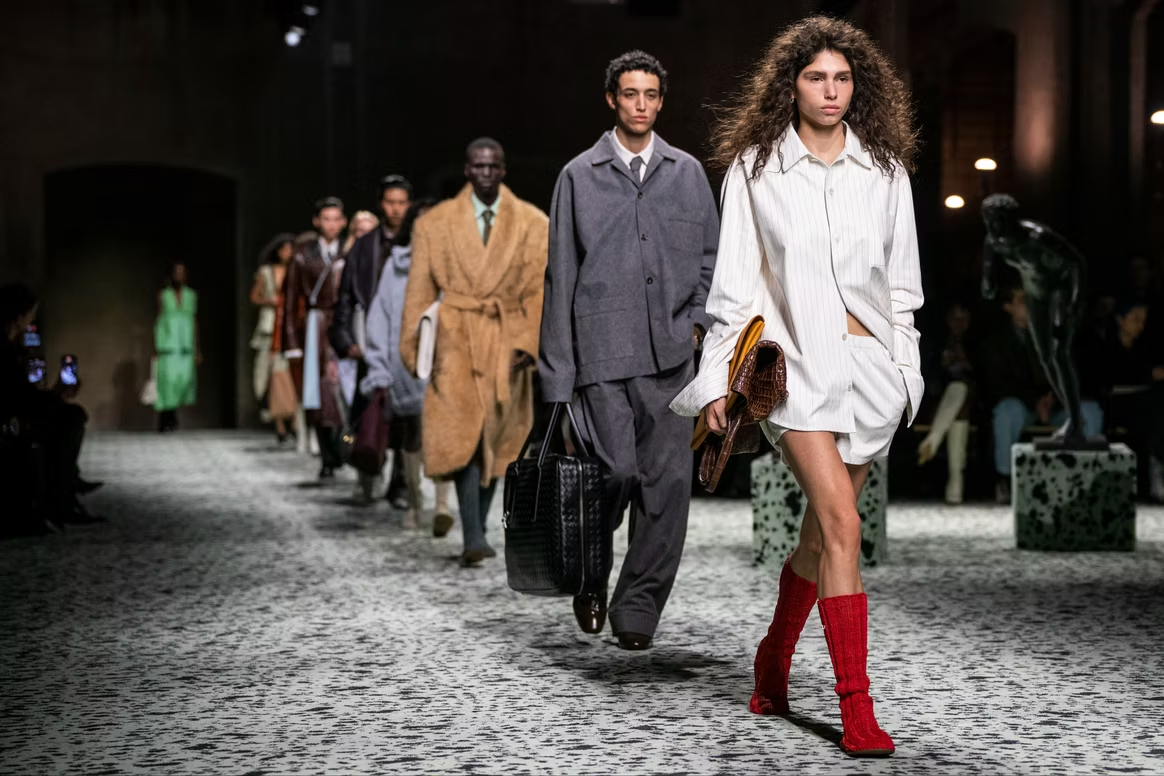

I still remember the first time I stood in a Paris atelier, watching a single feather get stitched onto a gown that had already taken three months to reach this stage. The quiet focus in the room hit me harder than any runway show ever could. Haute couture isn’t just clothes—it’s a living craft where every thread carries centuries of tradition and a designer’s wildest dreams. If you’ve ever wondered what really happens behind those flawless Paris Fashion Week looks, you’re in the right place. Let’s pull back the velvet curtain together.
What Is Haute Couture, Really?
Haute couture, literally “high sewing” in French, means garments made entirely by hand for one specific client, using the finest materials and techniques that machines simply can’t match. These pieces aren’t churned out in factories; each one is a bespoke masterpiece shaped through dozens of hours of human skill. Unlike anything you’ll find in stores, couture exists to celebrate the impossible—turning fabric into wearable art that fits like a second skin.
The Legal Backbone: How It’s Protected and Regulated
Only a handful of houses earn the right to call their work haute couture, thanks to strict French law dating back to 1945. The Fédération de la Haute Couture et de la Mode (FHCM) acts as the gatekeeper, approving or revoking the label through a government commission. Without meeting every rule, a brand loses the prestigious title overnight—no exceptions. This protection keeps the craft pure in a world of fast fashion knockoffs.
The Role of the Fédération de la Haute Couture et de la Mode
The FHCM, born from the 1868 Chambre Syndicale, now oversees everything from scheduling shows to supporting innovation. It helps member houses with marketing, technology, and even sustainability efforts while preserving handcraft traditions. President Ralph Toledano calls it a “land of free expression” for designers, and the federation makes sure that creativity stays rooted in excellence. Without this body, the whole system would collapse under commercial pressure.
A Brief History: From Worth to Modern Masters
Charles Frederick Worth, an Englishman in Paris, invented the modern couture house in 1858 by treating dressmaking as art rather than service. He introduced live models, seasonal collections, and client fittings that set the template we still follow. Icons like Coco Chanel, Christian Dior, and Cristóbal Balenciaga built on his foundation, each adding their own revolution. Today’s houses carry that legacy while adapting to new generations of clients who crave both heritage and relevance.
Inside the Ateliers: The Heart of Couture
Walk into any official couture atelier and you’ll feel the weight of history mixed with laser-focused calm. These workshops, mostly clustered around Paris’s golden triangle, employ teams of specialists who treat each garment like a lifelong project. No rush, no shortcuts—just generations of know-how passed down through apprenticeships. The atmosphere feels more like a sacred studio than a factory floor.
The Two Main Workshops – Flou and Tailleur
Couture ateliers split into two distinct worlds: the flou for soft, flowing dresses and the tailleur for structured jackets and suits. In the flou, draping and pleating create dreamy silhouettes; in the tailleur, precision cutting and canvas interlining build architectural shapes that hold forever. Each specialist stays in their lane, but they collaborate seamlessly when a gown needs both softness and structure. This division keeps every detail perfect.
Meet the Petites Mains
The real heroes are the petites mains—the “little hands”—highly trained seamstresses who execute every stitch by hand. Many have spent decades perfecting one skill, whether it’s inserting invisible zippers or attaching thousands of beads without a single crooked line. They work in small teams on single garments from start to finish, building an almost personal relationship with each piece. Their quiet pride is what makes couture feel alive.
The Step-by-Step Creation Process
Every couture collection begins months before the runway, following a ritual that hasn’t changed much in 150 years. Designers start with inspiration, then translate it into sketches that ateliers turn into reality through prototypes and endless refinements. Clients often get involved midway, requesting tweaks that only handwork can deliver. The entire journey can stretch four to five months for one gown.
Finding Inspiration and Sketching Designs
A creative director pores over mood boards, travels for research, or draws from personal obsessions before the first pencil hits paper. Once sketches are approved, fabric swatches arrive from exclusive mills—sometimes only enough for one dress. The team debates every element, knowing the final piece must feel both timeless and utterly new. This stage is pure imagination meeting reality.
Crafting the Toile Prototype
Before touching precious silk or lace, artisans create a toile—a rough muslin version that tests fit, proportion, and movement. Draped directly on a mannequin or live model, it reveals where the design needs breathing room or extra support. Adjustments happen in real time, turning flat sketches into three-dimensional dreams. Multiple toiles may be made until the silhouette sings.
Multiple Fittings for Perfection
Clients usually attend at least three to ten fittings, each one refining the garment to their exact posture and lifestyle. A mannequin molded to their measurements waits in the atelier for between-visit tweaks. Seamstresses mark, pin, and reshape until the dress moves like it was born on the body. This obsessive process is why couture feels like armor tailored to your soul.
Hand Embellishments and Final Assembly
Only after the structure is flawless do the decorative specialists step in—embroiderers, beaders, feather workers, and pleaters. One gown might require 800 hours just for hand-applied crystals or a single braid that took 100 hours alone. Everything is sewn by hand, pressed by hand, and finished by hand. The result isn’t just beautiful; it’s engineered to last lifetimes.
Materials and Techniques That Define Excellence
Couture demands the rarest fabrics—hand-woven silks from Lyon, lace from Calais, or feathers sourced ethically from small farms. Techniques like the “point de Venise” embroidery or bias-cut draping invented by Vionnet turn these materials into sculpture. Artisans still use 19th-century tools alongside modern micro-tools, blending old mastery with new precision. The combination creates texture and movement no machine can replicate.
Comparison: Haute Couture vs. Ready-to-Wear
| Aspect | Haute Couture | Ready-to-Wear |
|---|---|---|
| Production | Fully handmade, one-of-a-kind | Machine-made in batches |
| Fit | Custom measurements, multiple fittings | Standard sizes |
| Time per garment | 100–800+ hours | Hours or days |
| Price | $10,000 to $500,000+ | $500 to $5,000 |
| Availability | Private clients only | Stores and online |
| Purpose | Artistic expression & status | Wearable fashion for everyone |
This table shows why couture feels worlds apart—it’s not clothing; it’s legacy.
The Clients Who Make It All Worthwhile
Only about 4,000 people worldwide regularly commission couture, mostly royalty, billionaires, and a growing circle of private collectors who treat pieces like art investments. Many fly to Paris for fittings, building lifelong relationships with their favorite maisons. Some even keep a personal mannequin in the atelier so work can continue without them present. Their trust fuels the entire ecosystem.
Costs and Exclusivity: What You’ll Pay for True Luxury
Expect to invest anywhere from tens of thousands for a simple tailored jacket to half a million for an intricately embroidered evening gown. The price reflects not just materials but the invisible labor of dozens of specialists. Yet clients don’t shop for bargains—they buy the experience of owning something no one else on earth will ever have in exactly that form.
Famous Ateliers and Their Signature Touches
Each house guards its own secrets, passed down through decades of petites mains who know every quirk of the founder’s vision. Visiting these spaces feels like stepping into a private museum where the exhibits are still being created. The atmosphere mixes reverence with playful creativity.
Chanel’s Legendary Rue Cambon Ateliers
At 31 Rue Cambon, Chanel’s flou and tailleur workshops sit one floor apart, connected by a hidden spiral staircase. Artisans still reference Gabrielle Chanel’s original codes—camellia flowers, quilted jackets, and weightless tweeds—while pushing boundaries with modern lightness. One jacket alone can involve 30 different hand techniques before it ever reaches a client.
Dior’s Precision in Tailoring
Dior’s ateliers maintain the founder’s obsession with perfect internal architecture. Every bar jacket starts with a hand-sculpted canvas “skeleton” that gives it that famous New Look hourglass without feeling stiff. The team of 25 tailors, including apprentices, works in quiet concentration, ensuring the garment looks as flawless inside as out.
Challenges Facing Haute Couture Today
Sourcing enough skilled apprentices remains difficult—France faces thousands of unfilled craft positions despite strong demand. Sustainability pressures force houses to rethink exotic materials while preserving quality. Digital noise sometimes overshadows the slow, quiet work, yet the FHCM keeps pushing for balance between heritage and innovation. The craft is resilient, but it demands constant care.
The Future: Innovation Meets Tradition
Technology now helps without replacing hands—3D modeling refines early designs, while sustainable dyes and recycled threads appear in new collections. Young designers experiment with cultural fusions, and the FHCM actively recruits global talent as guest members. Couture is evolving into a laboratory where tradition fuels tomorrow’s breakthroughs rather than holding them back.
How Haute Couture Shapes the Fashion World
Runway looks trickle down within months: a pleating technique or embroidery motif shows up in ready-to-wear, then high street. Major brands use couture as their creative R&D department, testing ideas that later sell millions. Even if you’ll never own a piece, you wear its influence every time you choose a well-cut jacket or a standout dress detail. That quiet power keeps the entire industry alive.
People Also Ask About Haute Couture
What does haute couture mean exactly?
It refers to made-to-order garments created entirely by hand in approved Paris ateliers for private clients, following strict legal standards set by the FHCM.
How is haute couture different from ready-to-wear?
Couture is custom-fitted with dozens of hand hours per piece and multiple personal fittings; ready-to-wear uses standard sizes and faster production methods.
Who buys haute couture?
A tiny global group of ultra-wealthy clients—around 4,000 people—who value exclusivity, artistry, and the personal relationship with each maison.
How long does it take to make a haute couture dress?
Anywhere from two to five months, with some gowns requiring 800 hours or more of specialized handwork.
Is haute couture still relevant in 2026?
Absolutely—it serves as the creative heartbeat of fashion, inspiring trends while preserving irreplaceable skills that machines can’t duplicate.
Frequently Asked Questions
Can anyone order a haute couture piece?
Yes, but you typically need an introduction or invitation to the private client salons. Most houses prioritize long-term relationships over one-off sales.
Where are haute couture shows held?
Exclusively in Paris twice a year—late January for spring/summer and early July for fall/winter—often in historic venues chosen to match each collection’s theme.
Do couture garments last longer than normal luxury clothes?
They do, often becoming heirlooms because every seam and embellishment is reinforced by hand for durability as well as beauty.
Are there male haute couture designers?
Many, including Jean Paul Gaultier and Giambattista Valli, who create stunning menswear and gender-fluid pieces within the official schedule.
How can I learn more about the craft?
Visit the FHCM website, watch atelier documentaries, or attend open days at schools like the École de la Chambre Syndicale de la Couture Parisienne.
Stepping away from the ateliers, you realize haute couture isn’t dying—it’s quietly thriving as proof that human hands can still create magic money can’t mass-produce. Whether you dream of owning a piece someday or simply love understanding the story behind the sparkle, knowing these inner workings makes every red-carpet moment richer. The next time you see a gown that stops you in your tracks, remember the hundreds of invisible hours and the passionate people who made it possible. That knowledge is the real luxury.